

Digital operations fail when content and inventory exist in separate data architectures. Implementing software to manage blogs and inventory eliminates the technical gap between marketing and stock control. Most organizations currently maintain separate systems for content and logistics. This separation causes data silos. It leads to redundant manual entry across multiple platforms. You likely experience difficulty tracking campaign performance alongside stock levels. This inefficiency reduces the precision of operational data. Manual data transfer increases the risk of administrative errors.
This article defines the technical requirements of a centralized system. It explains the operational advantages of using a single platform for both blog content and inventory data. Readers will learn how to establish a single source of truth for all data types. We examine the benefits of automated reporting for content and inventory. The text provides a functional overview of how shared access improves team collaboration. This analysis focuses on system utility and structural efficiency. Centralized systems provide a stable infrastructure for business growth. Integrated management tools ensure that data remains consistent across all departments.
Key Takeaways
- Integrated systems track physical stock and digital content assets within a single architecture. This functionality supports diverse organizational needs through multi-data type categorization.
- Implementing software to manage blogs and inventory creates a single source of truth for all organizational data. Centralization reduces manual transfer points and maintains long-term data integrity.
- SaaS platforms offer automated precision for data tracking across multiple user sessions. These systems eliminate the errors associated with disconnected manual spreadsheets.
- Unified data management requires a comprehensive audit of existing data types before implementation. Standardizing naming conventions ensures a systematic migration to the new platform.
- Clikox Inventory Software provides a centralized platform for managing five distinct data categories. License activations are available to support both solo operations and team collaboration.
Functional Requirements of Software to Manage Blogs and Inventory
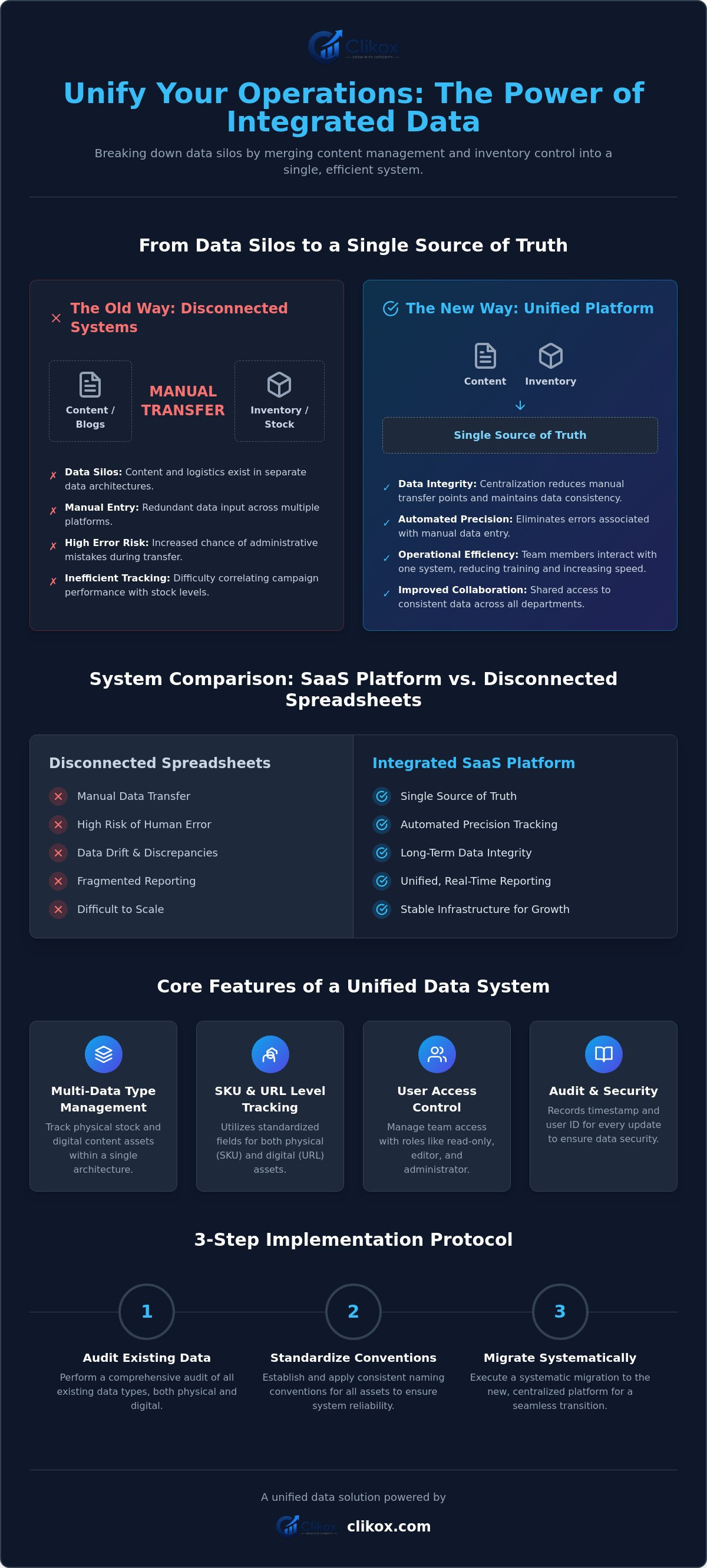
Integrated systems monitor physical stock and digital content assets within one interface. This software to manage blogs and inventory centralizes operational oversight. It supports multi-data type categorization for diverse organizational needs. A centralized repository replaces the requirement for separate licenses. Functional clarity depends on standardized data entry templates. These templates apply to all asset types. Consistency across data fields ensures system reliability. Categorization includes tags, categories, and internal reference numbers. It's a system that assigns a unique identifier to every entry. This identifier allows for rapid retrieval of data. Data remains accessible for immediate scanning. Administrative efficiency is the primary outcome of this structure.
Defining Blogs as Digital Inventory
Blog posts represent a measurable investment in time and capital resources. These assets function as digital stock. Organizations must track blog status, publication dates, and authorship. This process mirrors the tracking of physical items. Traditional inventory management principles apply to digital content. Content creation involves labor costs and research expenses. Centralization ensures marketing assets are visible to all operational units. Digital inventory requires administrative precision.
Core Features for Unified Data Tracking
Unified systems utilize standardized fields for diverse tracking needs. Physical assets require SKU-level tracking. Digital assets require URL-level tracking. The software integrates these requirements into a single data architecture. User registration protocols manage internal team access. Permissions include read-only, editor, and administrator roles. The software doesn't allow unauthorized database changes. It records the timestamp and user ID for every update. Security is maintained through license activation requirements.
Precision is the primary goal of integrated systems. Automated data entry reduces the risk of human error. Each data point occupies a discrete unit within the repository. The software to manage blogs and inventory facilitates rapid scanning of all organizational assets. It provides a methodical flow for information delivery. Administrative tasks become more efficient through system uniformity. The infrastructure supports scalable growth. Reliability is achieved through strict adherence to standardized protocols. The system remains ready and ordered for immediate use. Data remains consistent across all touchpoints. Systematic arrangement of offerings proves competence. Functional terms convey value without descriptive adjectives.
Structural Advantages of a Centralized Data Repository
Data integrity depends on the number of manual transfer points within a system. Centralized architecture reduces these points to a minimum. Using a multi-data type management platform ensures consistency across all records. A centralized data repository serves as the single source of truth for the organization. Information remains static until an authorized user initiates a change. This structure prevents the data drift common in decentralized environments. Software to manage blogs and inventory provides this structural stability. Data flows through a single channel. Errors don't propagate across disconnected databases.
Operational complexity decreases through interface consolidation. Team members interact with one system instead of several. This uniformity reduces training requirements. Staff navigate the environment with increased speed. Systematic arrangement of information facilitates rapid data retrieval. Users scan the interface for specific data points without delay. Efficiency is a direct result of structural simplicity. The system architecture remains predictable. Every module follows a standardized layout. Data entry follows a subject-verb-object format. This consistency allows for rapid scanning. Information delivery remains steady and mechanical. Each data point exists as a discrete unit.
Eliminating Operational Silos
Marketing teams and inventory managers share the same administrative dashboard. This shared environment eliminates communication gaps. Real-time updates prevent discrepancies between advertised content and available stock. A blog post won't promote an out-of-stock item when the data is linked. Shared workflows improve coordination between distributed remote units. Every department views the same data set simultaneously. Discrepancies don't occur because the database is singular. The software to manage blogs and inventory ensures that all units operate from identical information. This alignment increases organizational precision.
Reducing Software Subscription Costs
Consolidating functions into one SaaS platform reduces total monthly expenditure. Single-license models simplify administrative oversight for business owners. There's no need for multiple login credentials or billing cycles. Centralized payment processing provides clear visibility into software costs. Organizations allocate capital more effectively when overhead is transparent. Adopting a unified system for inventory control and content management streamlines the budget. It's a method for maintaining professional efficiency. The focus remains entirely on system utility. Redundant software applications are removed from the workflow. This removal eliminates unnecessary financial waste.
Evaluating SaaS Platforms vs. Disconnected Spreadsheets
Spreadsheets lack the automated precision required for complex campaign management. Digital platforms support five or more data types simultaneously. Spreadsheets become unwieldy as data volume increases. SaaS platforms provide reliable data tracking that persists across user sessions. This software to manage blogs and inventory maintains a consistent state for all records. It doesn't rely on local file saving or individual hard drives. Every update is recorded in real-time within the database. The system remains accessible to authorized users from any location. Individual knowledge workers require this stability to manage their daily tasks effectively. Centralized systems provide the necessary infrastructure for data persistence.
Software allows for the functional analysis of inventory management software to happen automatically. This automation removes the need for manual calculation. It ensures that data remains accurate throughout the business cycle. Disconnected spreadsheets require constant oversight to prevent errors. They don't offer the same level of architectural reliability as a cloud-based platform. A centralized system provides a clinical view of organizational health. It eliminates the friction between content creation and stock oversight. The software to manage blogs and inventory creates a predictable environment for data entry. This predictability is essential for maintaining long-term records.
Limitations of Manual Data Entry
Manual entry in spreadsheets is prone to human error and data corruption. One incorrect cell can invalidate an entire organizational report. Version control issues arise when multiple team members access the same file. It's difficult to identify the most recent data set in a shared folder. Spreadsheets cannot easily link blog performance to specific inventory movements. This lack of connectivity creates information gaps between departments. Marketing teams don't see stock levels during campaign planning. Inventory managers don't see content schedules. The separation of data types leads to operational failure. Manual systems lack the structural integrity required for modern business operations.
Advantages of Automated Precision
Automated reporting provides objective insights into content and stock trends. The system functions as an inventory control system for all asset categories. It tracks marketing initiatives alongside physical goods. Administrative dashboards offer a clinical view of all organizational assets. This visibility supports better decision-making for management. Campaign management features allow for the tracking of marketing initiatives in real-time. You can see which blog posts correlate with stock movement. The software to manage blogs and inventory provides this level of detail. It creates a systematic arrangement of all data points. Automated precision ensures that the organization remains focused on its core objectives.
Implementation Protocols for Unified Data Management
The transition to a centralized system begins with a comprehensive audit of existing data types. This audit identifies every information unit currently in use. Standardizing naming conventions is essential for successful data migration. Inconsistent naming causes database errors during the transfer process. Users must follow established protocols for importing inventory data from spreadsheets. These protocols ensure that every column maps to the correct system field. Systematic testing of the admin dashboard ensures all data points are accurate. Testing validates the integrity of the database before full deployment. This software to manage blogs and inventory requires a stable foundation for operational success.
Step 1: Data Categorization and Mapping
Identify the five core data types to be managed within the system. These types include physical stock, blog content, license data, user profiles, and campaign logs. Map blog categories and product tags to a unified hierarchy. This hierarchy ensures that a single tag can reference both a product and a related article. Determine which fields are mandatory for both content and inventory records. Mandatory fields prevent the creation of incomplete data entries. The software to manage blogs and inventory requires these fields for every new record. Categorization maintains the structural integrity of the centralized repository.
Step 2: User Role Configuration
Assign specific permissions to content creators and inventory staff. Content creators require access to the blog module. Inventory staff require access to the stock module. Configure the admin dashboard to display relevant data to each user role. This configuration limits information noise for the user. Establish protocols for license activation and new user registration. New users must complete the registration process before accessing system functions. Organizations can purchase license activations to expand their team access. This process ensures secure access to the centralized repository.
Step 3: Analytics and Campaign Setup
Define the KPIs to be tracked across both data environments. Key metrics include stock turnover and blog engagement rates. Set up automated reporting schedules for weekly or monthly reviews. These reports provide a clinical view of organizational performance. Link inventory alerts to blog publication schedules for coordinated launches. This link ensures that marketing efforts align with stock availability. The system monitors these connections automatically. It provides alerts when stock levels fall below the required threshold for a planned campaign. The software to manage blogs and inventory facilitates this coordination through automated triggers.
Implementation follows a methodical sequence. Each step reinforces the stability of the data infrastructure. Reliability is achieved through strict adherence to these protocols. The organization gains a single source of truth upon completion. Data remains consistent across all operational units. Systematic arrangement of information supports rapid scanning and retrieval. The infrastructure is now ready for daily administrative tasks. Automated precision remains the primary operational goal. The system provides a neutral environment for data management. Efficiency is the direct result of this architectural discipline.
Technical Specifications of Clikox Inventory Software
Clikox provides a centralized platform for managing five distinct data types. These categories include physical inventory, blog content, user licenses, customer records, and campaign analytics. The system functions as software to manage blogs and inventory within a single interface. It supports license activations for both solo users and collaborative teams. An integrated admin dashboard facilitates the tracking of customers and content in real-time. The system operates on a reliable SaaS subscription model with global accessibility. Users access the environment through standard web protocols. Data remains consistent across all geographic locations. Reliability is maintained through a stable cloud infrastructure. The architecture prioritizes functional clarity over aesthetic complexity.
Campaign and Analytics Functionality
Users track the performance of marketing campaigns in real-time. The dashboard displays conversion data alongside stock availability. This software to manage blogs and inventory correlates content engagement with physical movement. Detailed analytics provide data-driven insights into inventory turnover rates. Management uses these insights to adjust procurement schedules. Reporting tools generate clinical overviews of all organizational activities. Every report follows a standardized template for rapid scanning. The system delivers these reports automatically according to user-defined schedules. Data points exist as independent units for precise analysis. Automated reporting removes the requirement for manual data entry.
Security and Access Control
Registration protocols ensure that only authorized personnel access sensitive data. Every system interaction requires a verified user ID. License management tools allow for easy scaling as team requirements change. Administrators manage license activations through a central console. This console provides an objective view of current seat utilization. Clikox Inventory Software maintains a utilitarian focus on data security. The platform utilizes encryption for data at rest and in transit. Access logs record the timestamp and action for every database update. These logs provide a clear audit trail for administrative oversight. Security remains an invisible but essential infrastructure layer. The system architecture protects organizational integrity through strict access protocols.
The platform follows a directory-like rhythm for information delivery. Every feature serves a specific administrative purpose. The interface lacks persuasive flourishes or unnecessary decorations. It provides a neutral voice for organizational management. Users find the system predictable and easy to navigate. The software functions as a silent architect for business data. It's a tool designed for professional efficiency. Each module operates as a discrete functional unit. Consistency is the primary value of the Clikox system. The infrastructure remains ready for immediate deployment in diverse business environments. This systematic approach ensures long-term operational precision.
Establishing Centralized Data Control
Modern business operations require a stable data infrastructure. Transitioning from disconnected spreadsheets to a centralized repository ensures information persistence. Integrated systems eliminate the data silos between marketing units and stock managers. This software to manage blogs and inventory provides a clinical view of all organizational assets. Systematic arrangement of data supports rapid scanning and retrieval. Accuracy is maintained through automated reporting and standardized templates. Reliability is the primary outcome of this architectural discipline. The system remains ready for immediate deployment in diverse business environments.
Clikox Inventory Software supports the centralized management of five data types. The platform features integrated campaign analytics for real-time performance tracking. A secure multi-user admin dashboard manages staff access and permissions. These technical specifications ensure long-term operational precision. Reliability is achieved through strict adherence to established data protocols. Organizations gain a single source of truth for all administrative functions. The infrastructure supports scalable growth through license activations. Access Clikox Inventory Software to centralize your data. Systematic arrangement of information ensures continued professional efficiency.
Frequently Asked Questions
Can I manage both physical products and blog posts in the same dashboard?
Yes. The system integrates physical stock tracking with digital content management within one interface. Users access one dashboard to view SKU data and blog URLs. This software to manage blogs and inventory eliminates the need for switching between separate platforms. It establishes a single source of truth for all operational assets. Administrative efficiency is maintained through this unified view. The dashboard provides immediate access to all record types.
How does centralized software improve team collaboration?
Centralized systems provide a shared data environment for all departments. Marketing and operations teams view identical records in real-time. This visibility reduces communication errors regarding stock availability and content schedules. Every team member operates with the same information set. Shared access ensures that workflows remain synchronized across the entire organization. The system functions as a silent architect for business data. Collaboration is a direct result of structural simplicity.
What are the five data types managed by Clikox Inventory Software?
Clikox manages physical inventory, blog content, user licenses, customer records, and campaign logs. Each data type is categorized as a discrete unit within the database. The system uses standardized templates for each category to ensure consistency. This classification supports comprehensive organizational oversight. Users scan the admin dashboard for specific data points across these five functional areas. Reliable data tracking persists across all user sessions and departments.
Is it possible to migrate inventory data from Excel to a SaaS platform?
Yes. The system includes protocols for importing inventory data from spreadsheets. Users map Excel columns to the corresponding database fields in the SaaS platform. This process ensures data integrity during the migration. Standardized naming conventions prevent transfer errors. Migration protocols allow for a systematic transition from disconnected files to a centralized repository. Data remains consistent throughout the entire transfer process. The infrastructure remains ready for immediate deployment.
Does the software provide automated reporting for marketing campaigns?
Yes. The software generates clinical overviews of marketing performance and stock movement automatically. Automated reporting tools provide objective data on campaign ROI. Users set schedules for weekly or monthly report delivery to their administrative dashboard. These reports correlate blog engagement with inventory turnover. This software to manage blogs and inventory delivers insights without manual calculation. The system provides a neutral environment for data analysis and performance tracking.
What security measures are in place for user registration and access?
The system utilizes strict registration protocols and verified user IDs for every login. Access control is managed through specific user roles and permissions. Every database update is recorded with a timestamp and user identifier. Encryption protects data at rest and in transit. These measures ensure that only authorized personnel interact with sensitive organizational information. The platform maintains a utilitarian focus on data security. Security remains an invisible infrastructure layer.
How do license activations work for remote teams?
Administrators manage license activations through a centralized console. Remote team members receive unique credentials after an activation is assigned. The system supports multi-user access from any geographic location with internet connectivity. Scaling is achieved by purchasing additional license activations as team requirements change. This model provides stable infrastructure for distributed workforces. Every user interacts with the same administrative dashboard. The process ensures secure access to the centralized repository.
Can individual users utilize Clikox for personal data tracking?
Yes. The software supports license activations for solo users. Individuals use the platform to track personal assets, digital content, or small-scale inventory records. The functional features remain identical to those used by collaborative teams. Solo users benefit from the same automated precision and data categorization tools found in larger organizational deployments. The system architecture remains stable for individual use cases. Every user follows the same registration protocols for secure access.